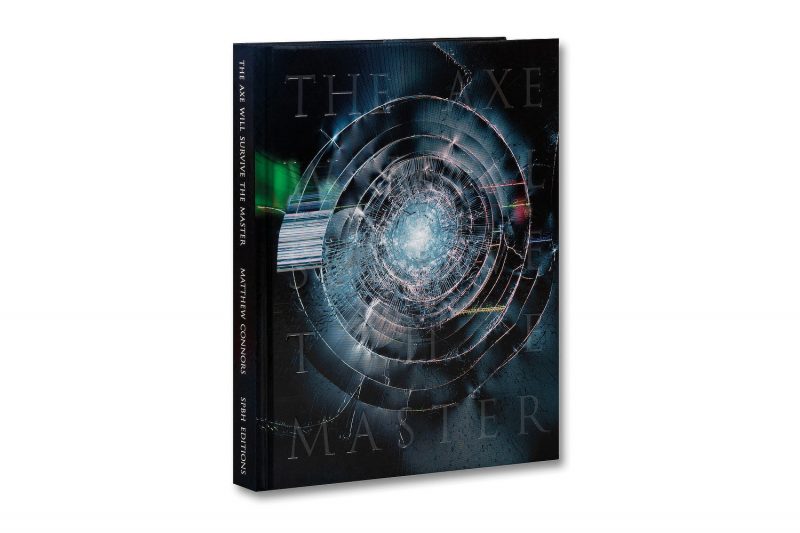
The Axe Will Survive the Master

Article main image

I don’t know if you’ve noticed but our world isn’t doing so well. Even as there still is endless denial by fossil-fuel corporations and the politicians they’ve bought climate change has started to wreak havoc. In addition, in many places of the world freedom is retreating (the actual freedom, not the selective one that depends on who claims it).

It is becoming increasingly obvious that while democracy needs capitalism in a carefully tempered way to succeed, capitalism — especially not the rampant neoliberal one we have to live under — does not need democracy to succeed.

The world of art is largely the most impotent part of all of this. Oligarchs and plutocrats spend some of their money in order to decorate their homes and to elevate what  their images (see the so-called Met Gala). But commercial aspects aside, art has no bearing on the world at large.

That, and I would argue only that, is what makes it so precious in this world. People make or look at art because it lifts them up (metaphorically speaking).

But the world of art is increasingly under attack because those in power operate under a devious assumption. They believe that they can partake in whatever they think art has to offer without having to deal with the reality of how and especially by whom art is being made.

For example, the Venice Biennial has come under fire because it is deemed to have become “too political”. The words “too political” always serve as markers for an agenda. In essence, those in power want their art and especially their artists to be the right kind of political.

For certain quarters (such as Germany’s ruling class [which is curiously unalarmed about the country’s reincarnated Nazi party polling at over 25%]), artists rejecting the participation of genocidal countries is “too political”. I suspect that those same people would still admire, say, Pablo Picasso’s Guernica. But that would only demonstrate that the outrage over art is always selective (insert *always has been* meme here), and it has nothing to do with art itself.

What is an artist to do? With time and age steadily advancing I have come to the conclusion that every artist will simply have to decide that question on their own, in the comfort of their own home (let’s keep in mind that some artists don’t have a home any longer because it was bombed to bits by one of the aforementioned genocidal countries).

If an artist has a responsibility to address this world’s larger ills, that responsibility can only ever be personal, meaning: arising from their own convictions. To demand more from artists places an unrealistic expectation on some of the most powerless people.

In terms of art itself, I am torn between two poles. I want art speaking to the dismay I feel watching vast parts of the world burn (whether literally or metaphorically). I want to experience art that expressly takes that fire as its subject matter (as I did myself with two of my photobooks).

On the other hand, I also want to experience art that does not take that fire as its subject matter, to instead focus on the frequent beauty that still exists in this world.

Of course, I want beauty in both cases: beauty can mean an infinity of things, which makes the concept itself, well, beautiful — while making the jobs of those writing about it a lot harder.

I understand why so many artists would rather not make work around the fires. To a large extent, the healing potential of art emerges when it offers solace to those making it. I definitely do not judge any artists for the choices they make concerning what to focus their attention on.

Still, I have massive respect for people like Matthew Connors who has taken his camera to some of the most contested places on this planet. These have included Egypt during its short-lived fight for freedom or Ukraine, whose people are under attack from one of those genocidal countries. Connors could be photographing sticks and stones, but he chooses not to.

The work in Egypt resulted in Fire in Cairo, a book around the events he witnessed and that was not only critically acclaimed but also won a few prestigious awards.

And now there is a new book that carries the somewhat unsubtle title The Axe Will Survive the Master. Of course, there’s absolutely nothing subtle about the people who govern this planet.

The Axe is a logical continuation of Fire in that the conflagration in the Egyptian capital in modified form has engulfed larger parts of the rest of the world.

The work was photographed in a number of places all across the globe (over the course of over a decade), and of course there are regional differences between those.

A photographer acting as an artist has to move from the simple descriptiveness of photographs towards distilling their own larger truth, and that is what Connors did here. In other words, where there are local markers in any of the photographs, the viewer is asked to look past those.

It’s straightforward to read The Axe as a description of the conflict between state power that sides with and defends capital (and nothing else) and an amorphous group of citizens opposed to having their rights and freedoms trampled.

It’s noteworthy to keep in mind how in Western media the framing around these kinds of events changes, depending on where people are taking to the streets to protest. In the West, typically the police are said to uphold the order which is under threat by demonstrators (who inevitably will be blamed for any violence). Elsewhere, though (such as in Hong Kong), the police are described as violently suppressing demonstrators’ rights.

In the book, Connors mixes photographs from places that through their media treatment usually are perceived as being different, alluding to a form of violence that is almost invisible: it’s not the physical violence playing out in the streets — it’s the structural violence that forces people into very limiting life situations.

The book does not aim to have its viewers arrive at any specific conclusion. Instead, it serves to build up an enormous unease, which, I think, is the only realistic goal an artist can have. That unease serves to counter the effects of what in different contexts I have termed photography’s neoliberal realism.

Bertold Brecht famously complained that a photograph of a factory was unable to tell its viewers anything about the mechanisms at play behind its walls (please excuse my loose paraphrasing). In the strictly Marxist terms Brecht was thinking in he was and is correct: photography can only show surfaces — and not abstract concepts.

But Brecht erred in that a photograph of a factory is indeed able to project some of the ideology behind it onto viewers. In our contemporary context, that’s what I described as neoliberal realism, in which photography communicates the power of capitalism: as someone embedded in it, you can either submit to it (and be one of the “winners” [at least in theory]), or you can reject it (and be one of the “losers”).

Contemporary capitalism has made full use of photography’s power. My favourite example is the much maligned Museum of Ice Cream. If as a viewer or critic you only focus on how ridiculous the idea might be or how it merely amplifies its visitors’ supposed narcissism, you’re missing the point entirely.

The Museum of Ice Cream does not celebrate ice cream. It also does not celebrate its visitors (who, in any case, are not any more narcissistic than the rest of us). Instead, it focuses on submission: visitors take their photographs, enjoying the experience, and then they share them. If you fully submit to a world in which the most prominent freedom is the one that allows you to decide what to consume, then you might as well enjoy it.

Another way of understanding the Museum of Ice Cream (and our neoliberal world in general) would be to see it as Disney World with the cartoon characters and stories removed: you’re left with pure aesthetics — great and easy to photograph, and the taking and sharing of those photographs demonstrates how much you enjoy your role in this system.

“The spectacle is the ruling order’s nonstop discourse about itself, its never-ending monologue of self-praise, its self-portrait at the stage of totalitarian domination of all aspects of life,” Guy Debord observed (in: The Society of the Spectacle, Bureau of Public Secrets, 2014, p. 7)

In other words, in our contemporary world it is incredibly easy to create work that essentially is neoliberal realism, regardless of whether you’re a visitor to the Museum of Ice Cream or a celebrated fine-art photographer showing up at a rave: it’s all just the same thing.

Photographing the spectacle or the facades that surround us on its/their own (and by this I mean without any intervention by the photographer) at best will generate pictures that can be read in two ways, namely as a celebration of the spectacle (and thus of neoliberal capitalism) or as a description of the spectacle (and then possibly, if you’re very generous, as what in the world of contemporary photography is seen as a form of criticism).

The problem is that the celebratory aspect never fully fades into the background. And even your criticism — assuming that’s intended — ultimately comes across as shallow. Neoliberal capitalism thus neuters photography — unless you work very hard to avoid this.

Since my book on neoliberal realism was published, a number of photographers have asked me whether it is possible to avoid producing it. Yes, of course it is.

In order to avoid replicating neoliberal realism, you have to understand two things. First, you must not focus solely on what the pictures look like. Instead, you have to understand the codes embedded in them. And second (and crucially), you will then have to use the photographs’ codes against them.

Using the codes embedded in photographs against the larger system is not particularly complicated; but of course, in reality it is because the spectacle that so inevitably is part of our contemporary world makes it difficult. Once you understand that larger parts of the world are constructed in such a fashion that they look great in pictures it’s not that difficult to get there.

And that is exactly what Matthew Connors has done in and with The Axe Will Survive the Master. Crucially, the subversion of the spectacle does not play out through the photographs of the protestors and/or the expressions of protests. Remember, you might see similar pictures in the news.

Instead, Connors is flipping the codes of neoliberal realism against themselves through individual framings and photographic choices but also through the juxtaposition of the individual photographs in the book.

It’s a form of photographic judo. Parts of judo rely on using an opponent’s movements against them: instead of trying to counteract a movement by trying to stop it you amplify it by using its built-in momentum (albeit in a fashion not intended by the opponent).

The visual codes of state violence only work as long as they remain within the frameworks we are so familiar with. The moment a different framework arises, viewers are forcefully snapped out of experiencing the familiar. Then, they will clearly see the sheer brutality they had been trained not to notice. (By the way, the most crucial and widely noted recent tool for this type of unmasking of state violence has been the smartphone with its built-in video function.)

The Axe Will Survive the Master is a book of and for this moment, even as we don’t know when — or how — it might end. We don’t know, yet, what might emerge from it. As I noted earlier, it’s not the artist’s task to tell us. Instead, it is their job to alert us to what is happening around us to make us see, to make us feel.

From seeing and feeling — and then from acting — something new might emerge. It’s up to all of us to make it happen.

Highly recommended.

The Axe Will Survive the Master; photographs and text by Matthew Connors; 208 pages; SPBH Editions/MACK; 2026

If you enjoyed this article, please consider subscribing to my Patreon. There, you will find exclusive articles, videos, and audio guides about the world of the photobook and more. For those curious, there now is the possibility of a trial membership for seven days.

Much like journalism, photography criticism involves a huge investment of time and resources. When you become a subscriber, you not only get access to more of my work. You will also help me produce it (including the free content on this site).

There also is a Mailing List, which I use to send out supplementary materials — anything that has me inspired or that somehow seemed worth noting. Some of it is serious, some is not. You can sign up for free here.

Thank you for your support!
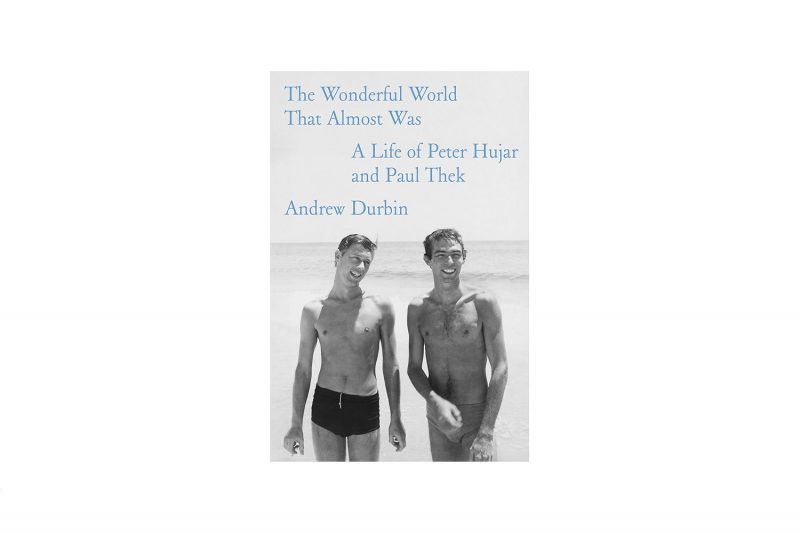
The Wonderful World That Almost Was

Article main image

A few years ago, Karin Wieland wrote a double biography of Marlene Dietrich and Leni Riefenstahl, two German women whose career ran in parallel and who made very different choices when faced with the rise of the Nazis. Dietrich ended up cheering on the Allied soldiers who had to invade Western Europe to rid it off the Nazi pest that Riefenstahl had so prominently promoted.

It’s possible that the two women met during the ill-fated Weimar Republic. But their lives mostly ran in parallel. And in each section of the book, the reader always has the other person in mind; the other person and her choices. It’s an extremely nifty device to not only bring forth the careers of two women artists living in a world in which the focus was on men; the device also serves to amplify the role and responsibility of personal choices.

In some ways, Andrew Durbin’s The Wonderful World That Almost Was — A Life of Peter Hujar and Paul Thek follows that model. As is always the case in life, it’s the details that differ; as is always the case in good writing, it’s those very details that make all the difference.

Hujar and Thek knew each other very well. They were friends before they became lovers. Then, they became brothers (of sorts), and they ended up doing the things that brothers do when they are as similar and as different as these two were. They quarreled, they fought, they grew apart.

Hujar was a photographer, Thek a painter, sculptor, and occasional performance artist. It’s straightforward to claim that both Hujar and Thek are in serious need of a rediscovery. At their time, they were relatively well known, in particular in the New York City art scene in which they moved and worked. But with time and for different reasons, they were almost forgotten.

The larger backdrop against which the two lives unfold is provided by the United States in the mid 1950s up until the early 1980s. Hujar and Thek were gay. Thek’s sexuality included a bisexual component, even as at the time it was never clear to anyone involved — Thek as much as the women he pursued — to what extent it was real (Susan Sontag, for a while a close friend of both, noted that “his supposed desire for her was mostly a fiction” [p. 370]).

Hujar’s and Thek’s lives included the Stonewall Uprising, which marked a turning point in the history of LGBTQ+ civil rights in the United States (one of the many small and revealing details from the book is that Hujar took the photograph that was used for one of the posters for the very first Christopher Street Liberation Day March in 1970). But it also included the AIDS crisis in the 1980s, which cost both their lives.

Any person could only dream of having a biographer as tender, caring, and compassionate as Durbin. There is enormous love for these two artists throughout the book, a love that does not shy away from revealing the many rough edges in these artists’ lives that a lesser biographer would have either omitted or smoothed over.

The biography itself extends from 1954 until 1975. Hujar’s and Thek’s childhoods and deaths are relegated to a short introduction and an epilogue. The book thus covers the time period when Hujar and Thek entered each other’s orbits, to spin around each other, getting closer and closer while spinning faster and faster — until centrifugal forces of their own making tore them apart.

As it turned out, the for me most endearing and searing portrait of Thek by Hujar was taken in 1975 when the photographer was making work for what would be the sole photobook produced during his lifetime. By that time, the two brothers had already grown apart, and they loved and detested each other in equal measure — the kind of mix that ordinarily only exists between actual siblings but that these two somehow managed to conjure up for themselves.

The final chapter of the book details the making of the book and those particular photography sessions. “The camera and the heart,” Durbin writes of these sessions, “were not opposed ways of seeing but extensions of each other.” Given how the book unfolded up until that point, it’s very difficult to see how there could have come anything after (besides the Epilogue).

As an aside Durbin’s observation is also why I think Diane Arbus disliked Hujar’s work so much: it demonstrated that very fact, namely that the camera and the heart are connected — a damning realization in light of the cynical theater of cruelty in her own photographs. [see p. 222ff. for context].

Hujar and Thek struggled not only with the roles they were granted in a country that was a lot less accepting of LGBTQ+ people than it is now (of course, it still has ways to go). They also tried finding their places in the world of artists they largely operated in.

Parts of Hujar’s struggle are widely known: up until maybe the 1980s, photography was not widely considered as art. What might this even mean, a photograph as a piece of art? Susan Sontag was dismissive in her famous book, much to the chagrin of Hujar (Lisette Model dryly remarked: “This woman, she knows everything, but she understands nothing” [p. 376]).

Thek, in contrast, moved from painting to sculpture to what possibly might be best described as installations that involve performative aspects. He did not have to fight for his works to be accepted as art; it’s just that he was brushing mightily against many grains, making art that was often widely admired but that simply did not sell and that also did not quite fit into how the world of art thinks of its wares.

Neither man was easy to work with. Hujar detested the commercial and editorial photography he had to do for a long time. Thek mostly felt misunderstood. Both men had trouble making the kinds of compromises a successful career in the arts demanded (and still does). Highly considered by many of their peers and friends, with time they both were relegated more and more to the margins of the world they so eagerly had tried to fit in.

While reading the book, I felt that ultimately it provides more access to Thek. This might be a consequence of the fact that he left a lot more first-hand information for Durbin to get access to. Even as a lot of his art pieces are by now simply lost there are huge numbers of notebooks to read. Hujar, in contrast, cultivated an aura of aloofness (with an occasionally devilishly flaring hot temper mixed in).

Thek might have suffered from some form of mental disorder. Undiagnosed at the time, his friends and acquaintances suspected that something was amiss; in retrospect, it is difficult to know. It’s possible that it was bipolar disorder.

All of this combines to an extremely engaging portrait of two very talented and conflicted men whose lives chronicle a very specific moment in the history of the United States (and especially New York City). The Wonderful World That Almost Was sets a new standard for how artists — and in particular photographers — might be portrayed.

Even in its most revealing moments, the book never strays from the Durbin’s tender touch: people are, well, people. Even the most talented ones are as tormented and imperfect as the rest of us. In the end, we’re all just trying to get by, trying to be accepted not just for who we are but also, and crucially, who we want to be.

Highly recommended.

Andrew Durbin: The Wonderful World That Almost Was — A Life of Peter Hujar and Paul Thek; 496 pages; Farrar, Straus and Giroux; 2026

If you enjoyed this article, please consider subscribing to my Patreon. There, you will find exclusive articles, videos, and audio guides about the world of the photobook and more. For those curious, there now is the possibility of a trial membership for seven days.

Much like journalism, photography criticism involves a huge investment of time and resources. When you become a subscriber, you not only get access to more of my work. You will also help me produce it (including the free content on this site).

There also is a Mailing List, which I use to send out supplementary materials — anything that has me inspired or that somehow seemed worth noting. Some of it is serious, some is not. You can sign up for free here.

Thank you for your support!
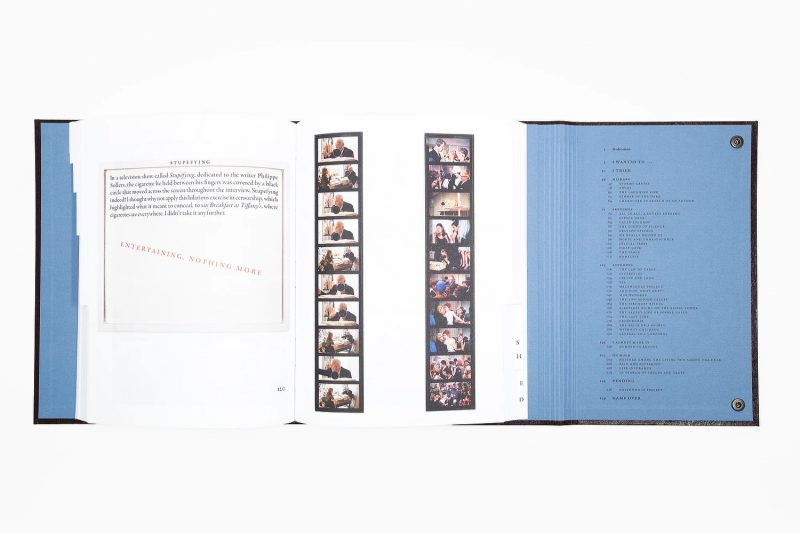
Catalogue Raisonné of the Unfinished

Article main image

Just to get this out of the way: the depressing aspect of Sophie Calle’s Catalogue Raisonné of the Unfinished is the fact that its least interesting ideas still are vastly better than anything we typically come up with.

I. Not we. No doubt, you, the reader of these words, has vastly more interesting and inspiring ideas than I do. Clearly. But we, yes, you and I, probably think of many (most?) of them the way the French artist does (as evidenced in the book): They’re either not interesting enough, or we don’t follow through, or for some reason they don’t pan out, or they go sideways or lead down the wrong path.

Life, after all, leaves behind a graveyard of those kinds of ideas. And who likes turning around to look at all of those corpses, some of them still festering?

Well, Sophie Calle does. Or maybe she doesn’t. Because that’s the thing with this particular artist: as a viewer, you can’t tell. Calle has never merely gone through the motions. Instead, when she engages with something in any of her works, she does so with genuine passion.

I had foolishly underestimated how interesting and engaging it would be to see what unfolds in Catalogue Raisonné of the Unfinished, buying it long past it was first published. It’s not even that all of the various ideas explored in the book are groundbreaking or even interesting. What makes it all interesting is the artist’s way of dealing with what had been left unfinished.

I have no way of knowing whether the following is true, but I think that creative people and all the rest will look at the book differently (I do not mean to imply judgment of any kind with this statement).

Creativity is unthinkable without ideas, and without ideas there can be no failure. Creative failure can take many forms — that much is clear from the book. For this reason alone you need to spend time with it if you’re one of those creative types. That graveyard of ideas comes with very different sections, and not all sections are the same.

For example, in Catalogue Raisonné of the Unfinished, sketches are separated from attempts. Sketches don’t necessarily fail because otherwise they’d be considered attempts. But they’re also less than attempts, given that they’re not intended to be the real thing.

It’s always easier to learn from other people’s experiences than from one’s own (what is obvious when seen from afar for all kinds of reasons becomes muddled and impossible to see clearly when it’s close). But as a reader, you do not have to figure out what happened with the various ideas in the book. Calle tells you.

“Lack of conviction” is one reason (in “Sketches”). “Wrong turn” is another. It’s hard to believe, but there also is “Self-Censorship”; but then that revelation says more about how as viewers/readers, the French artist has so successfully created the idea that she has no boundaries, that anything goes. No, that’s not the case.

It’s difficult not to confuse the art with its maker when said maker centers the art so much around herself and her vulnerabilities.

What Catalogue Raisonné of the Unfinished might demonstrate — and I’m aware that this contradicts the very sentiment I started out from (and why not?) — is not Sophie Calle has way more interesting ideas than the rest of us, but that her secret (if that’s the word) is to relentlessly pursue them and execute them.

After all, that graveyard of our past ideas (there it is again) is filled with our own murders, with neglect or lack of execution probably being the two most prominent causes of death.

(I once met a graduate student who did not really have a lot of photographs to show. Instead, they spent their initial crit only talking about all of the ideas they had in their mind. Owning a camera is not what makes you a photographer. Owning a camera is what makes you a person who owns a camera.)

But there is more. One of the most intriguing aspects of the book for me was to see the artist evaluate how some ideas turned out with time. Some ideas simply weren’t that interesting once they were pursued. Some went sideways. And then there were some that simply weren’t, to use the artist’s word, exhilarating.

Of course, you only learn about this once you pursue an idea. But ideas often lead to unexpected outcomes — unless, that is, you stick to the original idea, no matter what happens.

This gets at maybe my biggest problem with a lot of contemporary photography: too many books and exhibitions feature photography that illustrate an idea in the worst possible fashion. As a viewer, you can tell that someone had an idea (which is good) and then they faithfully produced it as if the idea where a paint-by-number piece of work (which is not good).

In other words, too much contemporary photography fails the very test that had certain of Sophie Calle’s ideas end in Catalogue Raisonné of the Unfinished.

Honestly, how much of contemporary photography really passes the “Entertaining, nothing more” threshold? Three quarters of, for example,  Martin Parr’s career output fail that test. Which by the way isn’t even a form of criticism as much as an observation regarding one crucial shortcoming of the world of photography: we all want photography to be art, but we never talk about what we want our art to do.

From my teaching years I know that most photographers don’t bother dealing with Sophie Calle because photography doesn’t play a large enough role in her work but also because — and I know that people would never admit this in public — it is simultaneously too playful and sincere.

But that’s a huge mistake. If anything, if you want to take just one thing from Catalogue Raisonné of the Unfinished as a creative person (whether you’re a photographer or whatever else), it’s that creativity lives from everything that makes us human (which is why “AI” will only ever produce meaningful art for people who don’t understand the very essence of art itself).

So get yourself a copy of the book and then apply the criteria used by Calle to your own ideas, sketches, and projects: could anything have gone farther? Did anything not go far enough?

In the end, art is made by human beings. Without being afflicted by the vagaries of human life art is not art.

I’m sure that there are numerous ideas or projects that did not make it into this book. This is, after all, a fiction — much like the rest of Sophie Calle’s work. But just like the rest it holds up so well.

Recommended.

Catalogue Raisonné of the Unfinished; texts and images by Sophie Calle; 240 pages; Actes Sud, 2025

If you enjoyed this article, please consider subscribing to my Patreon. There, you will find exclusive articles, videos, and audio guides about the world of the photobook and more. For those curious, there now is the possibility of a trial membership for seven days.

Much like journalism, photography criticism involves a huge investment of time and resources. When you become a subscriber, you not only get access to more of my work. You will also help me produce it (including the free content on this site).

There also is a Mailing List, which I use to send out supplementary materials — anything that has me inspired or that somehow seemed worth noting. Some of it is serious, some is not. You can sign up for free here.

Thank you for your support!