I think you can trace the degree with which someone will embrace authoritarian thinking by looking at to what extent they will agree with that anyone who has not actually violated the law does not have to worry about dealing with law enforcement. The theoretical idea is sound. But the reality is not — for all kinds of reasons.
The more authoritarian someone’s mindset, the less they will be willing and able to deal with the actual reality of law enforcement. The more they will loudly proclaim the presumed validity of the underlying concept (it is no surprise that conservative and especially far-right parties loudly promote what they call “law and order”).
For all kinds of reasons, law enforcement tends to be flawed. For example, having a lot of wealth will simply give you access to a form of justice not available to those lacking funds. The colour of your skin or whether or not you come across as someone “not from here” is likely to determine whether justice will be served.
And there is the fact that human beings make mistakes, and some mistakes can become very costly for those who find themselves at the receiving end of the consequences arising from those mistakes.
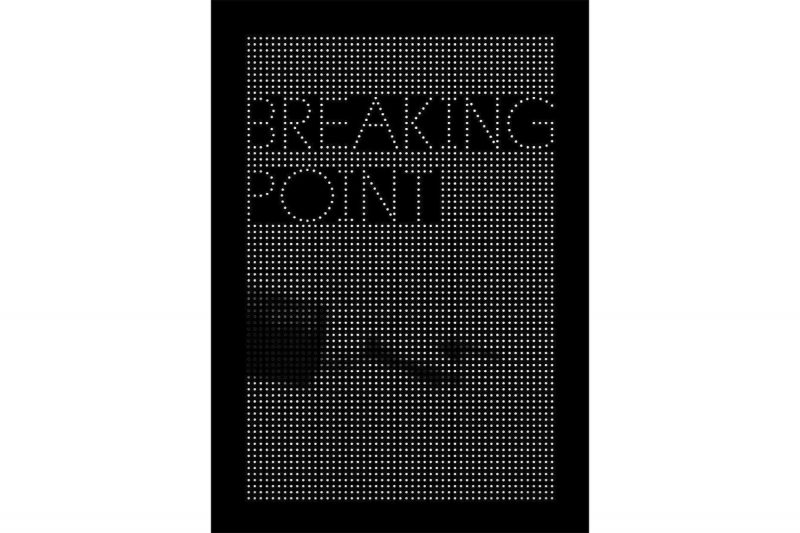
Why would you confess to having committed a crime that you did not in fact commit? Isn’t that absurd? Who would do that? Again, in theory this makes no sense. But the actual reality of law enforcement tells a very different story. “The National Registry of Exonorations reports that between 1989 and 2024,” Robin Dahlberg writes in Breaking Point, “13 percent of all exonerated individuals were wrongfully convicted because of a false confession.”
Photographers often discover topics that they then dive into to produce work around it. At times, I think of this practice as a form of cosplay: you take on a role that isn’t actually yours, meaning, most importantly, that you lack in-depth insight into what you’re actually dealing with.
In Dahlberg’s case, though, there are many years of working as civil rights attorney that inform the book: the lawyer-turned-photographer knows exactly what she is talking about. For some topics — including this one — I believe this matters deeply.
Going astray briefly from the task at hand — writing a review of a photobook — I believe that anyone picking up photography after having had a long career in another practice ought to think about making work around what they know so much about. I have many reasons for this. To begin with, it does help knowing the ins and outs of whatever you’re making work around. But you will also have a lot of access (in whatever form) that outsiders will never have.
In other words, good intentions are, of course, good and necessary; but there are those topics where it really helps if someone knows all of the details of what they intend to cover. And that is the case here.
Breaking Point is centered around individuals who spent many years in jail because they were coerced into false confessions.
Jeffrey Deskovic, for example, was 16 years old at the time. The DNA from the crime scene (a rape and murder) didn’t match his, and that should have been the end of it. It wasn’t. Obtaining a confession included a variety of actions, including a number of “polygraphs” (a pseudo-scientific device), which ended in the teenager on the floor “curled into a fetal position”, admitting to the crime that he had not in fact committed. Deskovic spent 16 years in jail before he was exonerated.
There are ample descriptions of the processes with which the fake confessions were obtained in the book. Of course, their reality is impossible to imagine — and it’s likely that the wrongfully convicted would have said the same thing before they were subjected to what can only be described as a travesty of justice.
The book’s emotional core at close-up photographs of the faces of Jeffrey Deskovic, Vanessa Gathers, Bryon Halsey, Eddie Lowery, Christopher Ochoa, and Raymond Santana. Dahlberg photographed them close up while they were talking — re-enacting the interrogations in which and with which a crime they did not commit was intended to pin on them.
Those closely cropped portraits — photographed against a black background — pull a heavy punch. In between, there are descriptions of some of what happened, written in the subjects’ own handwriting. (“The detective grabbed my arm. ‘This is where the needle’s going to go if you don’t cooperate.'” — part of text written by Christopher Ochoa)
Even if you don’t read the text, it becomes very clear that something horrible is going on in the book. But the handwriting makes it a lot harder not to read the text that is reproduced this way. This is not just some text, it’s someone’s text, and not reading it feels wrong and disrespectful.
Wrongful convictions are a difficult topic to communicate because a lot of the actual facts are infuriating, the processes themselves are tedious, the general visuals of the insides of institutions involved do not make for good photographs, and a lot of people will not even believe that someone would “just” confess to a crime they did not commit.
Breaking Point does what a good photobook ought to do, namely to use photography, text, and production choices to very strongly make its case. The book solves the problem outlined in the previous paragraph. In fact, if you wanted to, you could easily take this book as a prime example in a class on how to put together a photobook around a topic like this.
I want to conclude by quoting some of Robin Dahlberg’s words from the Acknowledgements: “I spent twenty years designing and implementing campaigns to reform the American criminal justice system. I came to the view that system as deeply flawed, prioritizing expediency and finality over justice. Meaningful change will only occur if the public knows and cares about the system’s deficiencies.”
Recommended.
Breaking Point; photographs and text by Rob Dahlberg; additional texts by Sara C. Appleby and by Jeffrey Deskovic, Vanessa Gathers, Bryon Halsey, Eddie Lowery, Christopher Ochoa, and Raymond Santana; 180 pages; Kehrer Verlag; 2026
If you enjoyed this article, please consider subscribing to my Patreon. There, you will find exclusive articles, videos, and audio guides about the world of the photobook and more. For those curious, there now is the possibility of a trial membership for seven days.
Much like journalism, photography criticism involves a huge investment of time and resources. When you become a subscriber, you not only get access to more of my work. You will also help me produce it (including the free content on this site).
There also is a Mailing List, which I use to send out supplementary materials — anything that has me inspired or that somehow seemed worth noting. Some of it is serious, some is not. You can sign up for free here.
Thank you for your support!