In the hands of a gifted photographer, their pictures conjure a world different than our own: photographs made in and from our world speak of another world, a world that is different and that, if the intent is artful, is filled with possibilities in a way that this one, the world we inhabit, does not.
In the West, such an approach is not part of how the world is being looked at. The world is what it is — what it appears to be, and anything else beyond that is either for children, for dreamers, or for any of those other people who “do not contribute much”. That anything outside of human nature might possess a spirit of any sorts is unthinkable. There only is reality, however poorly defined it actually is, and that’s it.
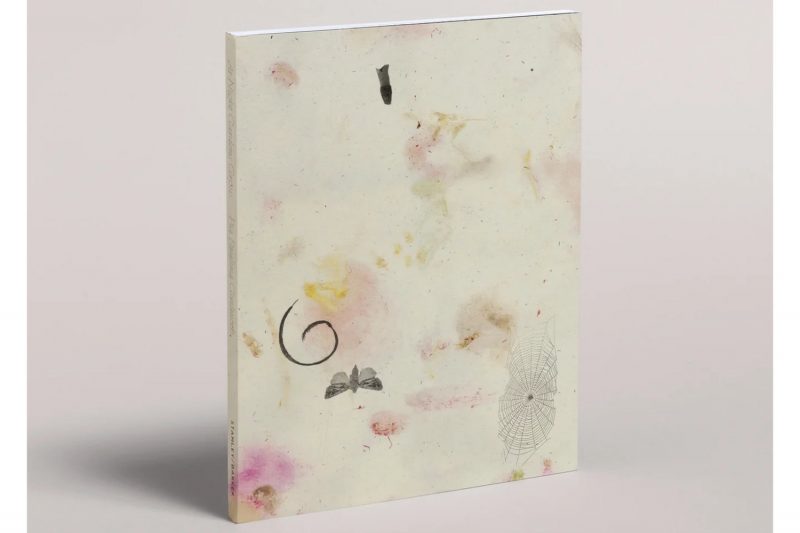
The photographs in Pia Paulina Guilmoth‘s At Night Gardens Grow refuse to engage with that reality that we’re supposed to stick to. You could describe them following any of the standard avenues available in the world of photography — focusing on, say, camera equipment or on possible classifications (“documentary”). But you would not do the work any favours; and you certainly would not produce any insight worth engaging with.
Let’s be open about this: the camera equipment is not responsible for the power of Guilmoth’s photographs, and neither are the various stagings and/or arrangements employed to produce some of them. The only thing that matters is the photographer’s vision and what I read in the picturse as her desire to conjure up another world, a world that through what might come across as occasional segments of strangeness offers more than what is available now.
It is not necessarily individual photographs that have that effect (even though there are traces in some). Instead, it is their accumulation in the form of the book, which allows the various visual strands in the photographs to add up to a larger story. I want that word, story, to be understood in the widest and most generous possible fashion; in fact, I’d like the reader to consider the possibility of a story being communicated in the book, with the story only fully coming to life inside the viewer’s mind.
This is a book for dreamers, and I mean this in the most supportive and complimentary fashion.
After looking through At Night Gardens Grow for the first time, I immediately had to think of Lieko Shiga‘s Rasen Kaigan (Spiral Shore). Before and following the devastating earthquake and tsunami in the northeast of Japan’s largest island (the artist’s studio was literally swept away), Shiga created an immersive and deeply moving body of work infused with elements of traditional Japanese folk tales and beliefs.
If you have never watched Shiga speak about the work, do yourself a favour and watch this video. In the video, the artist speaks of wanting to capture the invisible spirit of the village she had found herself in. It is that spirit that dominates the book and makes it such an overwhelming experience.
And that’s the same approach used by Guilmoth in different circumstances, albeit in somewhat similar settings — somewhere in Maine in what looks like a very rural area. Whether or not the North American artist’s work looks or possibly feels more interior than the Japanese one’s is a question I cannot possibly answer, in particular given that I know the back story of the publication of At Night Gardens Grow.
That back story is no secret. “First published in 2021,” the text on the publisher’s website states, “At Night Gardens Grow disappeared within a few short months of its release. This new edition reshapes the work from within, adding unseen images, and removing others, not as a revisionist act but as continuation. Pia revisits At Night Gardens Grow five years on, having transitioned in the interim, now reflecting on her life at that time, and the drastic changes that have taken place since its release.”
Originally, I ordered a copy of the book because I learned of the second edition that was reshaping the first. I have long wondered why the world of photography treats books of photographs as if they had been set in stone once they have been published.
Occasionally, a (typically famous) photographer gets to reissue an older book with the addition of a small number of added and previously unseen pictures. But beyond that, photobooks aren’t altered much. If you think about it, this makes no sense: there are any number of reasons why a new edition of a book might be different than an earlier one. If an artist and their understanding of the world has grown (for some photographers, that might be a big if, though), then why wouldn’t their books reflect that?
Guilmoth’s certainly is a perfect reason to reshape a book that previously existed in a different form. I have not seen that older version; I missed it for any of the reasons that I miss the release of a lot of books. But I didn’t miss this new version, and I’m very glad that I did not.
Alas, At Night Gardens Grow is not without its faults, first and foremost the treatment of the horizontal photographs. While the vertical photographs are made to fill almost the entirety of the pages they are found in, the bulk of the horizontal photographs are placed right in the center of their pages with enormous amounts of white space around them. Not only are they much too small (they feel forlorn), the vastness of the white space around them forms a huge distraction.
Here’s the thing: if a photographer creates a world for the viewer to truly immerse themselves into, then the book design has to allow for that immersion to happen — instead of constantly pulling the viewer out of it. As a viewer, you will thus have to force yourself to look past this very unfortunate design decision.
Recommended.
At Night Gardens Grow; second edition; photographs by Pia Paulina Guilmoth; 112 pages; Stanley Barker; 2026
If you enjoyed this article, please consider subscribing to my Patreon. There, you will find exclusive articles, videos, and audio guides about the world of the photobook and more. For those curious, there now is the possibility of a trial membership for seven days.
Much like journalism, photography criticism involves a huge investment of time and resources. When you become a subscriber, you not only get access to more of my work. You will also help me produce it (including the free content on this site).
There also is a Mailing List, which I use to send out supplementary materials — anything that has me inspired or that somehow seemed worth noting. Some of it is serious, some is not. You can sign up for free here.
Thank you for your support!